9. PS4 features a new 'connected UX'
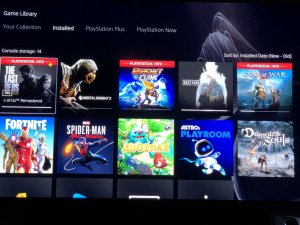
As Brown explains, "The PS4 user experience, which we're calling 'the connected UX' is a new paradigm where everything and everyone is connected. We aim to transform how users engage with and experience content across our platforms." Okaaaaay. So what does that mean? Well, the menu systems are built around five core principles: simple, social, immediate, integrated and personalised. It seems you'll be able to customise the layout, manage downloads and see friends' content and activities - all in your own way, the layout reflecting your priorities. It's all a bit airy, but the not thing Brown did specify was, when the machine boots up, it defaults to a 'What's New' screen, which shows everything that's going on in your network, from what your friends are playing, to videos they've posted, to news from publishers. The main UI shows recently played games, and each has its own 'live tile', which reveals news feeds, lists any friends who own the title, and shows the game's most viewed videos and news feeds. Developers can also create more complex tiles complete with game stats, real-time social leader boards, live updates on in-game events, and animated game items or characters. The live tiles can also immediately send the player to a specific mode, game save or challenge, without them having to go through the in-game menu options first.
10. Moving toward a real social network
Which means real photos of players and real names shown above characters in multiplayer sessions. However, your current PSN avatar and user name will still exist and you'll have control over who gets to see your real details. Players can also immediately join a friend's multiplayer session from the PS4 main menu.
11. The Share button and how it works
The most obvious addition to the DualShock 4 controller, apart from the touch pad, is the Share button. Apparently, a long press will take a screenshot of the current action, without interrupting gameplay, while a short press brings up the Share menu. On here there's the option to view, edit and share the last few minutes of gaming footage. PS4 uses a dedicated hardware encoder to continually record the last "several minutes" of footage, without taking any processor resources. So if anything interesting happens, you just hit share and upload the video. The video chip also allows players to live stream their gaming to the wider community. Spectators, meanwhile, will be able to chat to other viewers, or choose to join in the game if they own it themselves. If you don't own it, you can opt to start downloading it while still viewing the live footage. Brown also says that developers will be able to add a selection of spectator commands that the game can dynamically respond to. For example, if the onscreen player is fighting an end-of-level boss, but is low on health, a spectator could click a Heal option to help them out.
12. Seamless Remote Play
The PS4 implementation of Remote Play should be much smoother than PS3's thanks to the built-in video chip, which means there's no performance overhead for the game itself – plus the Gakiai technology is used from streaming so it's apparently very low latency. According to Brown, PS4 also supports a local multi-user lobby, so up to four players can connect to the same PS4 at once – and all saved games are bound to the user not the device.
13. Seamless companion apps
Meanwhile, the PlayStation App for iOS and Android devices allows you to browse friends lists, PSN options and the PlayStation Store as well as controlling your PS4; so you can tell it to start downloading a new game while you're on the bus home. And of course, Developers are also able to build their own companion apps, offering 'second screen' experiences to enhance the main screen action or providing remote functions so players can, say, tweak their Fifa teams via their smartphones, then get home and try out the new formation on the console. We're already seeing this happening, but it's likely to be a lot more common in the next generation.
14. Instant access to downloads
A lot of this is already known, but Brown went through it anyway and it's worth re-stating. Basically, when downloading digital games from the PlayStation Store, purchasers are able to start playing almost immediately. This is because developers are able to split game code into chunks, and as soon as the first section is downloaded, you're ready to go, with the rest coming down in the background. Players can choose to download either the single- or multiplayer component first, while patches and firmware updates will download automatically overnight if the system is left on standby. Brown also claimed that you'll be able to log on to your digital games library from a friend's house and start playing immediately. There's no word yet on the DRM aspects of this, but it's exactly what Microsoft was boasting about with Xbox One. It will be interesting to see how both manufacturers expand on all these concepts at the major Gamescom event in August.


 Nah, you can't be serious, I refuse to believe this


 during that era and that's why I think I got my *** kicked so bad. I can still remember the dudes that I played with.