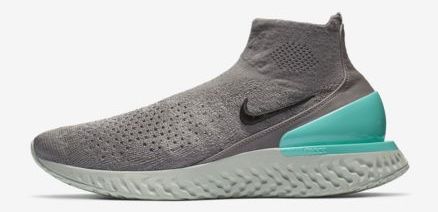
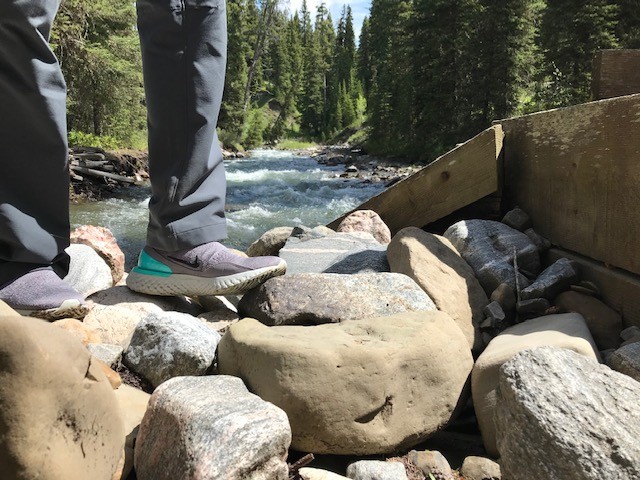
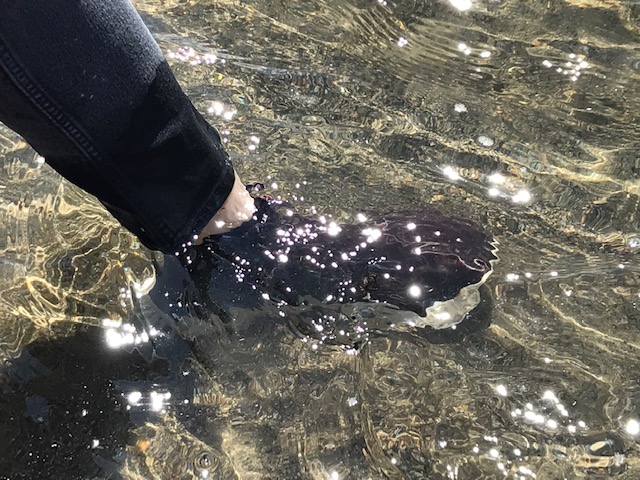
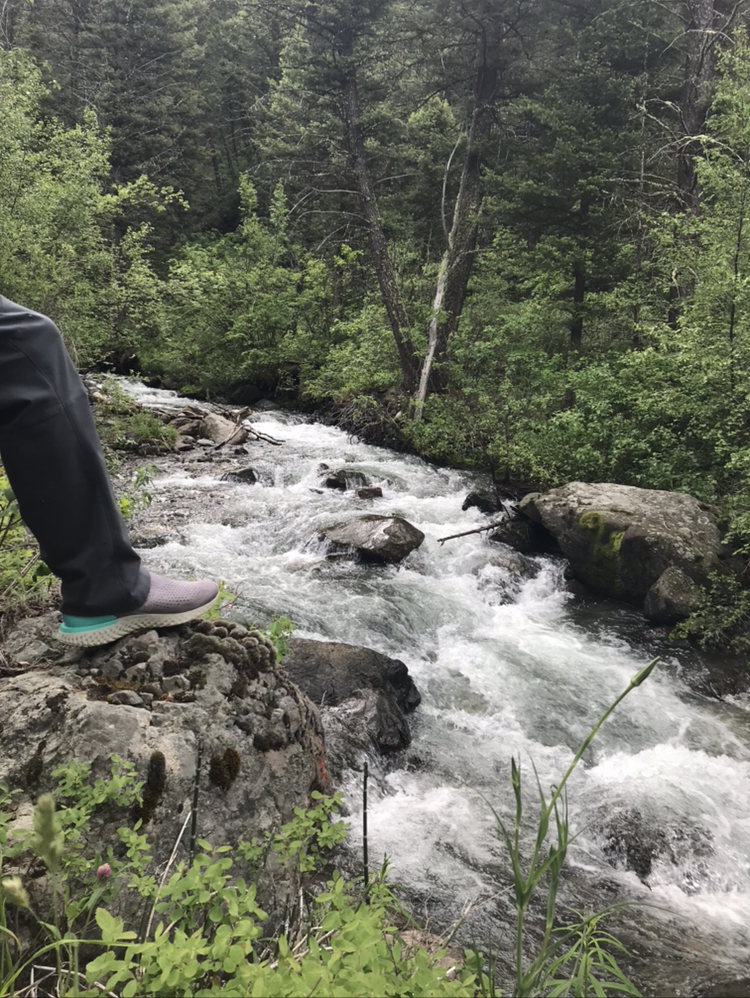
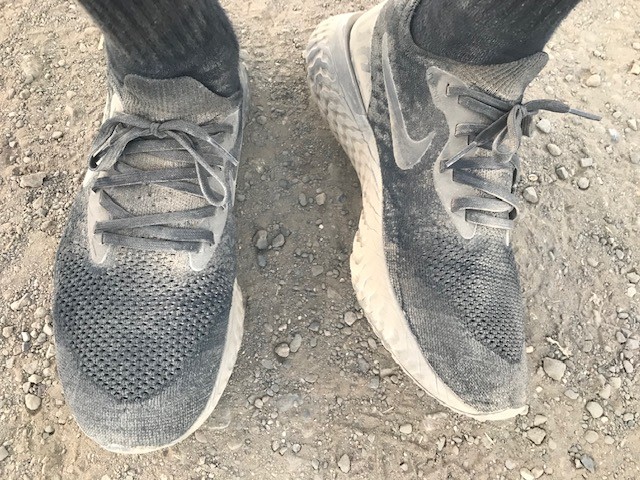
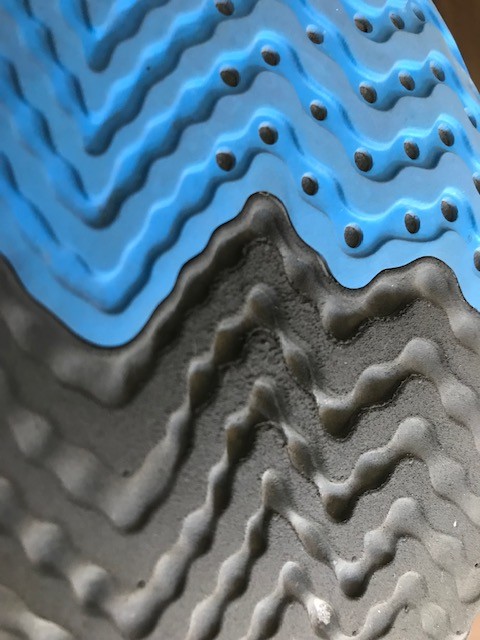
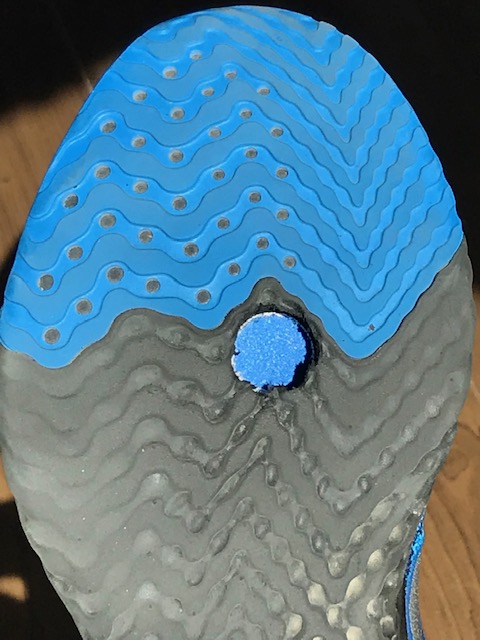
So how did the Rise do as a lightweight hiking shoe? They did everything so well that I thought it would be easier to talk about two situations they did not do well in, rather than everything they did great.
First is what I call heel stability. No, this is not over/underpronation control. I'm talking about how much the lower calf has to work to keep the ankle aligned on uneven surfaces. The long distance from the ankle to the bottom of shoe, combined with the soft foam midsole made my ankles work very hard when on rounded or sharply shaped rocks. It was not a problem on most trail surfaces, just when I got to sections with irregular rocks.
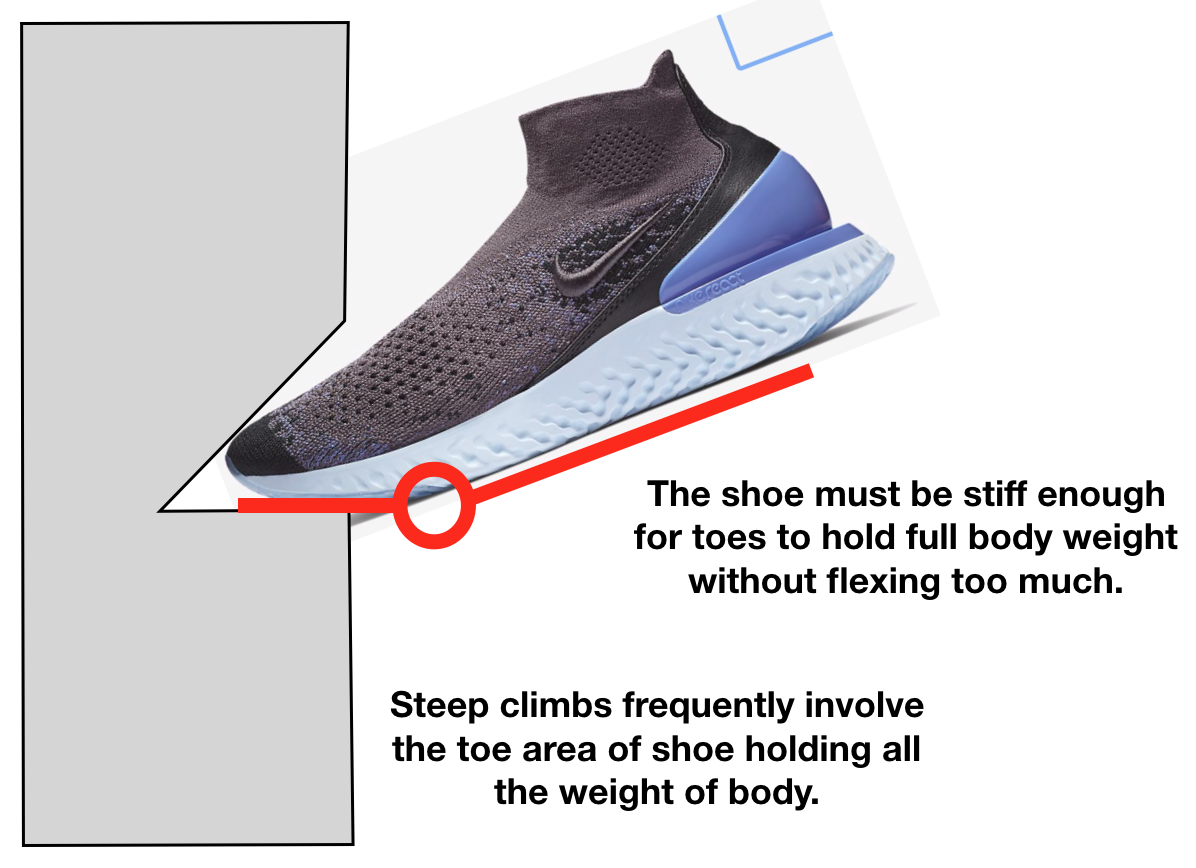
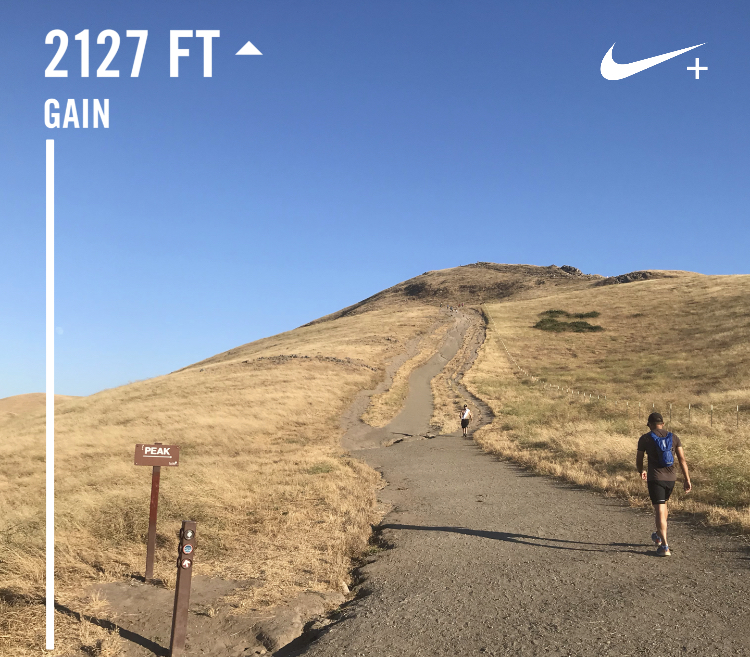
The second issue was the shoe was not stiff enough for the toe area to hold the entire weight of the body when only the toe area could contact the trail on steep climbs. I used my most flexible carbon fiber plates in the shoe, which made them more comfortable, but in retrospect I should have used my most stiff plate, or maybe even made a special completely rigid plate. This was only an issue on the extremely steep hills with only small gaps in rock to wedge the toes into for traction.
This is not a dig or complaint against the Rise, as all athletic shoes used for hiking will have these two issues. It is more of a rigid heavy hiking boot vs flexible lightweight boot issue. Only a very stiff, rigid, high rise boot will not have these two issues, and then, well, you are stuck with a hot, heavy, uncomfortable boot that traps foot heat and sweat.
In summary, the Rise is the best lightweight trail shoe I've ever used (especially with my carbon fiber plate added), but it will not replace dedicated stiff mountain boots for more extreme climbs.